Using MARSTEK powerbanks
MARSTEK's distributor materials include manuals for four powerbanks. Two are magnetic (P268D, P269D) and two are cylindrical (P326D, P327D). Everything on this page comes from the English section of each fold-out manual.
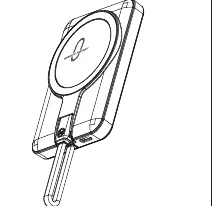
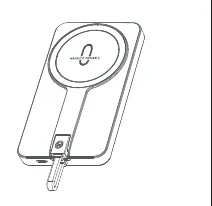
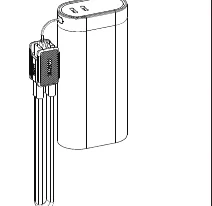
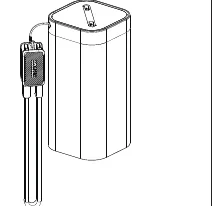
Specifications
| P268D | P269D | P326D | P327D | |
|---|---|---|---|---|
| Capacity | 5,000 mAh / 3.7 V / 18.5 Wh | 10,000 mAh / 3.7 V / 37 Wh | 10,000 mAh / 3.65 V / 36.5 Wh (cell) | 20,000 mAh / 3.65 V / 73 Wh (cell) |
| Cell type | Polymer lithium-ion | Polymer lithium-ion | Cylindrical lithium-ion | Cylindrical lithium-ion |
| Rated capacity | 2,700 mAh / 5 V 3 A | 5,800 mAh / 5 V 3 A | 5,800 mAh / 5 V 3 A | 11,500 mAh / 5 V 3 A |
| USB-C input | 2 ports, each max 18 W | 2 ports, each max 18 W | C1/C2, max 30 W | C1/C2, max 65 W |
| USB-C output | 2 ports, each max 22.5 W | 2 ports, each max 22.5 W | C1/C2, max 45 W | C1/C2, max 65 W |
| "Total Output" (as printed) | 22.5 W max | 15 W max | 5 V / 4.8 A (24 W) | 5 V / 4.8 A (24 W) |
| Dimensions | 92 × 61 × 13.5 mm | 118 × 66.5 × 16 mm | 47.9 × 26.6 × 95.9 mm | 47.3 × 47.3 × 96.1 mm |
| Weight | 125 ± 10 g | 195 ± 10 g | 230 ± 10 g | 425 ± 10 g |
| In the box | Powerbank, user guide | Powerbank, user guide | Powerbank, user guide, charging cable | Powerbank, user guide, charging cable |
| Special | Magnetic mounting | Magnetic mounting | — | — |
The "Total Output" lines in the manuals are lower than the per-port maximums for three models:
- P269D: each USB-C output is rated up to 22.5 W, but "Total Output" says 15 W max.
- P326D / P327D: USB-C outputs are rated up to 45 W / 65 W, but "Total Output" says 5 V / 4.8 A (24 W). This may mean the combined 5 V output when several ports are used at once, but the manuals do not explain it.
When you talk to customers, quote the per-port figures as "up to" and do not promise those speeds on several ports at the same time until MARSTEK clarifies.
The P268D/P269D manuals add: "It can be fixed magnetically, and the data cable can be charged."
How to use
P268D / P269D: power on and off
Press the power button to turn it on. Double-click the power button to turn it off.
P326D / P327D: just plug in
The manual says to "use the USB-C charging cable to connect the device to a charger/phone/laptop/iPad or other digital equipment to start charging/discharging/viewing battery level." Connecting a cable starts charging or discharging. These models come with a charging cable.
Recharge the powerbank
Connect a USB-C charger to a USB-C port. Input is up to 18 W (P268D/P269D), 30 W (P326D) or 65 W (P327D). The manual recommends using a charger or power supply that is recommended or sold by the manufacturer.
Switch off after use
"Switch off the power bank when not in use."
Safety and storage
- Read all the instructions before use. Supervise closely when it is used near children.
- Do not put fingers or hands into the product.
- Do not expose it to rain or snow.
- A power supply or charger not recommended or sold by the manufacturer may cause fire or injury.
- Do not use it beyond its output rating.
- Do not use a powerbank that is damaged or modified. Damaged batteries can cause fire or explosion.
- Do not disassemble it. Servicing must be done by a qualified person using identical replacement parts.
- Keep it away from fire. Temperatures above 100 °C (212 °F) may cause an explosion.
- P326D / P327D only: "Do not use product directly after immersion in water. (Ensure the USB-C port is completely dry before use.)"
Matters needing attention (all models):
- Do not place it in high-temperature or high-humidity environments, which can cause overheating, an internal short circuit or damage.
- Storage temperature should not exceed 45 °C. Long periods at high temperature shorten its service life. In practice, do not leave it on a car dashboard or in direct sun.
The manuals do not mention air travel. For reference, the M1200/M2200 manuals cite a 100 Wh airline limit for lithium batteries. All four powerbanks are below 100 Wh (largest: P327D, 73 Wh), but airline rules vary. Customers should check with their airline.
Flyer names vs manual models
The SRP flyer in Drive lists powerbanks as MPB10, PB10 and PB20. The manuals in Drive are named P268D, P269D, P326D and P327D. No source states how the names map. The flyer's feature icons only suggest these matches:
| Flyer name | Flyer claims | Closest manual model (unconfirmed) |
|---|---|---|
| MPB10 Magnetic Powerbank | Magnetic, 10,000 mAh, built-in braided cable, bi-directional USB-C, "18W self-charging in 2.85H" | P269D (magnetic, 10,000 mAh, 18 W input) |
| PB10 Powerbank | 10,000 mAh, 45 W max fast charging, detachable C2C cable, smart TFT display, "IPX7 Waterproof", "Approved for Flight" | P326D (10,000 mAh, 45 W output, cable included) |
| PB20 Powerbank | 20,000 mAh, 65 W max fast charging, detachable C2C cable, smart TFT display, "IPX7 Waterproof", "Approved for Flight" | P327D (20,000 mAh, 65 W, cable included) |
Confirm the mapping with Silvera Solar Power before you match a flyer item to a manual. See the price list for flyer pricing.
The flyer advertises PB10 and PB20 as "IPX7 Waterproof". The P326D/P327D manuals give no IP rating. They say "Do not expose the power bank to rain or snow" and "Do not use product directly after immersion in water (ensure the USB-C port is completely dry before use)". Follow the manual (engineering source) when you advise customers: do not use it wet, and dry the port before charging. The "Approved for Flight" claim is also not in the manuals.
Related
Sources
- P268D manual (Drive): English panel
- P269D manual (Drive): English panel
- P326D manual (Drive): English panel
- P327D manual (Drive): English panel
- SRP flyer (Drive): flyer model names